Exercise Guide
A Clinical Biomechanical Guide to Pectoral Hypertrophy, Sagging Prevention, and Natural Breast Lifting
In the discipline of aesthetic kinesiology, the concept of a “natural breast lift” is a result of structural optimization of the Pectoralis Major and Pectoralis Minor. While breast tissue itself is glandular and cannot be “toned,” the muscular shelf beneath it serves as the anatomical foundation. By inducing localized hypertrophy and improving scapular stability, we can effectively elevate the mammary glands, project the bust forward, and eliminate axillary laxity (underarm bulge).
The Anatomical Foundation of Bust Elevation
| Muscle Group | Biomechanical Role | Visual Transformation |
|---|---|---|
| Pectoralis Major (Upper) | Clavicular fiber activation. | Provides “fullness” at the top of the chest and cleavage. |
| Pectoralis Minor | Stabilizes the scapula and lifts the ribcage. | Acts as a deep internal lift, pushing the bust forward. |
| Serratus Anterior | Protracts the shoulder blade. | Smooths the side profile and eliminates “side-boob” rolls. |
1. The Kinetic Scapular Arm Circle
This entry-level move focuses on the rotational mobility of the shoulder girdle and the pre-activation of the chest wall. It serves as a neurological “wake-up” call for the fibers that support the bust.

Step-by-Step Execution:
- Step 1: Stance: Stand with feet shoulder-width apart, spine neutral, and core braced to prevent lumbar arching.
- Step 2: Extension: Extend both arms horizontally at 90 degrees (shoulder height). Keep your fingers long and palms facing downward.
- Step 3: Forward Momentum: Execute small, fist-sized circles moving forward. The movement should originate from the shoulder joint, not the wrists.
- Step 4: Directional Shift: After 30 seconds, reverse the direction. Focus on pinching your shoulder blades together during the back-swing to open the thoracic cavity.
Prescription: 60 Seconds total (30s forward/30s reverse) × 3 sets.

2. The Horizontal Supine Chest Press
This is the “Power Move” of bust lifting. By applying external resistance directly against the chest wall, you force the muscle fibers to thicken, providing a denser “shelf” for the breast tissue.
Step-by-Step Execution:
- Step 1: Setup: Lie supine on a firm surface. Flex your knees and plant your feet to stabilize the pelvis.
- Step 2: Loading: Hold dumbbells or weighted objects at chest level. Your elbows should be at a 45-degree angle from your torso—avoid a 90-degree flare to protect the rotator cuff.
- Step 3: The Ascent: Exhale and press the weights vertically. Imagine you are trying to squeeze your elbows toward each other at the top.
- Step 4: Eccentric Control: Inhale and lower the weights over a 3–4 second count. The slow descent is where the most muscle-toning occurs.
Prescription: 4 Sets of 12–15 Repetitions. Increase load weekly.

3. High-Tension Prayer Pose Isometric Press
Isometric holds create “time under tension” without joint movement. This move targets the medial fibers of the pectorals, enhancing the definition of the cleavage area.
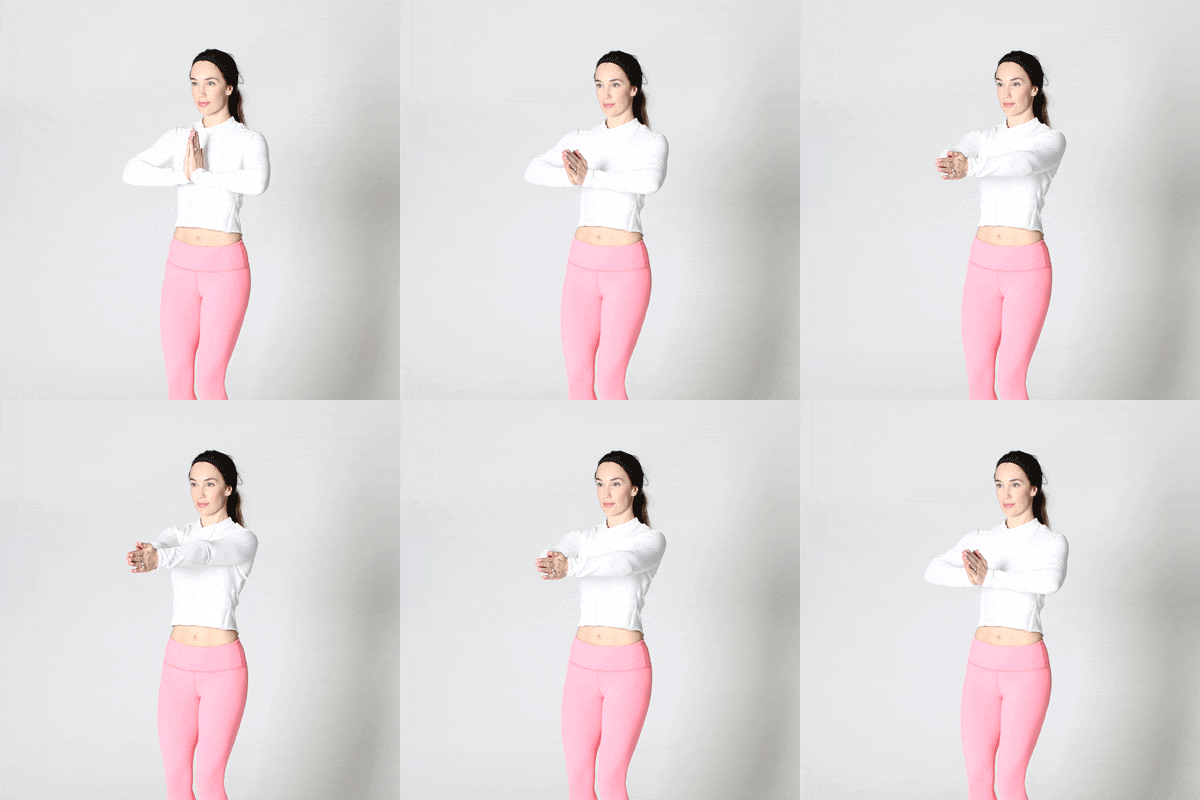
Step-by-Step Execution:
- Step 1: Alignment: Stand tall. Bring your palms together in the center of your chest.
- Step 2: The Squeeze: Press your palms together with maximal force. You should feel your chest muscles “pop” and tighten.
- Step 3: Pumping Motion: Hold the maximum squeeze for 5 seconds, then release 10% of the tension and immediately re-apply.
4. Vertical Plane Wall Press (Incline Push-Up)
The Wall Press is a functional variation of the push-up that emphasizes the upper (clavicular) head of the chest, which is responsible for that sought-after “upper fullness.”
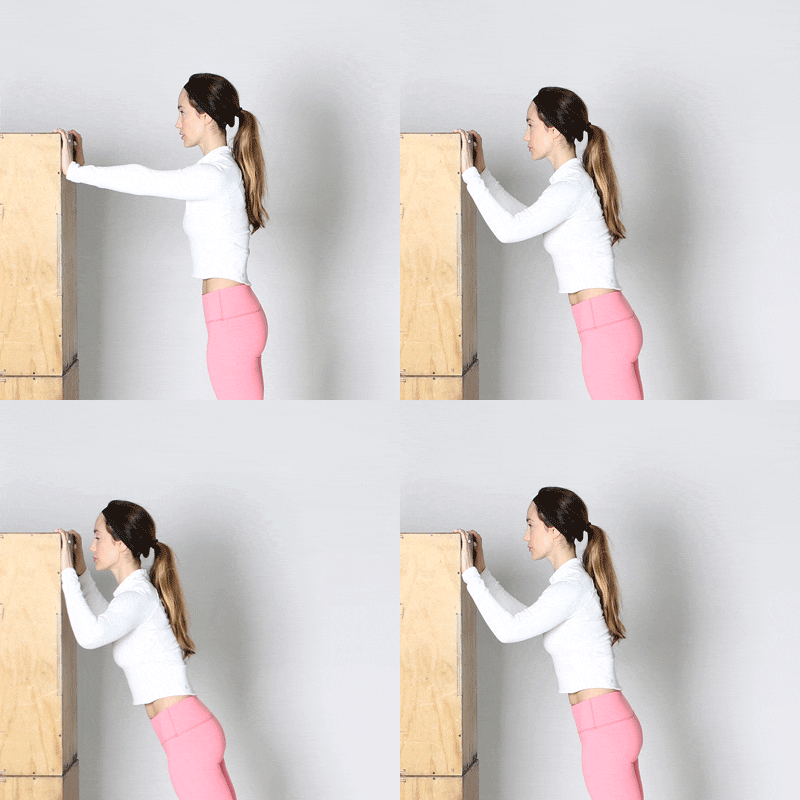
Step-by-Step Execution:
- Step 1: Positioning: Stand 2-3 feet from a wall. Place palms flat at shoulder height.
- Step 2: The Lean: Keeping your body in a rigid plank, lower your chest toward the wall.
- Step 3: The Drive: Explosively push back to the start. Focus on “wrapping” your chest muscles around your ribcage at the peak.
Prescription: 3 Sets of 15–20 Repetitions.
5. Chest Press Extensions (Linear Piston)
This move combines horizontal pressing with tricep extension, tightening the connective tissue around the armpit and the side of the breast.
Step-by-Step Execution:
- Step 1: Stand with elbows bent at 90 degrees, hands at shoulder height.
- Step 2: Drive your hands forward until the arms are locked. Squeeze the inner chest.
- Step 3: Retract the elbows sharply, pulling the shoulder blades together to stretch the front fascia.
6. Multi-Planar Dynamic Arm Presses
By moving through a full range of motion—behind the back to overhead—you target the chest from multiple angles, ensuring no “weak spots” in the suspension system.
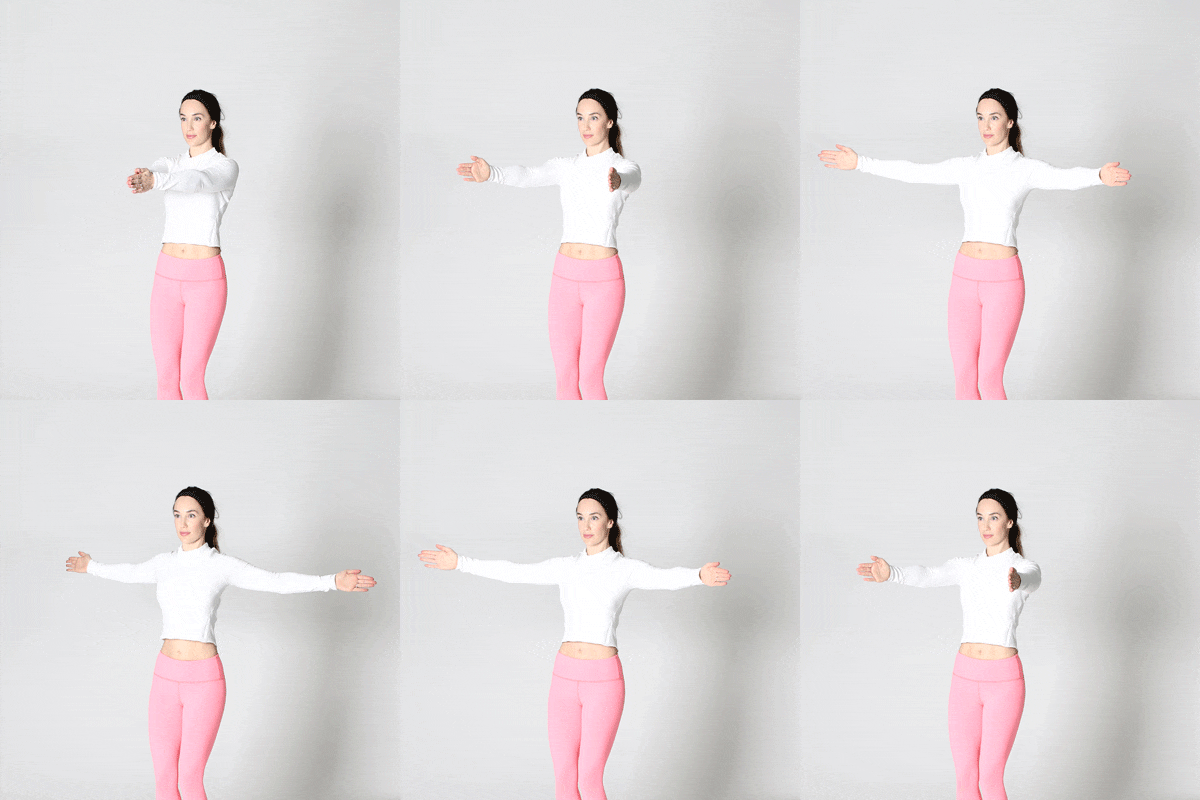
Step-by-Step Execution:
- Step 1: Reach arms behind your back and clasp hands to stretch the chest.
- Step 2: Swing arms forward and cross them in front of the chest (the “hug”).
- Step 3: Drive arms overhead, reaching for the ceiling to lift the ribcage.
7. Modified Knee Push-Ups (The Sculptor)
The kneeling push-up allows for a greater range of motion than a full push-up for most beginners, ensuring the chest muscles are fully stretched at the bottom—a key trigger for growth.
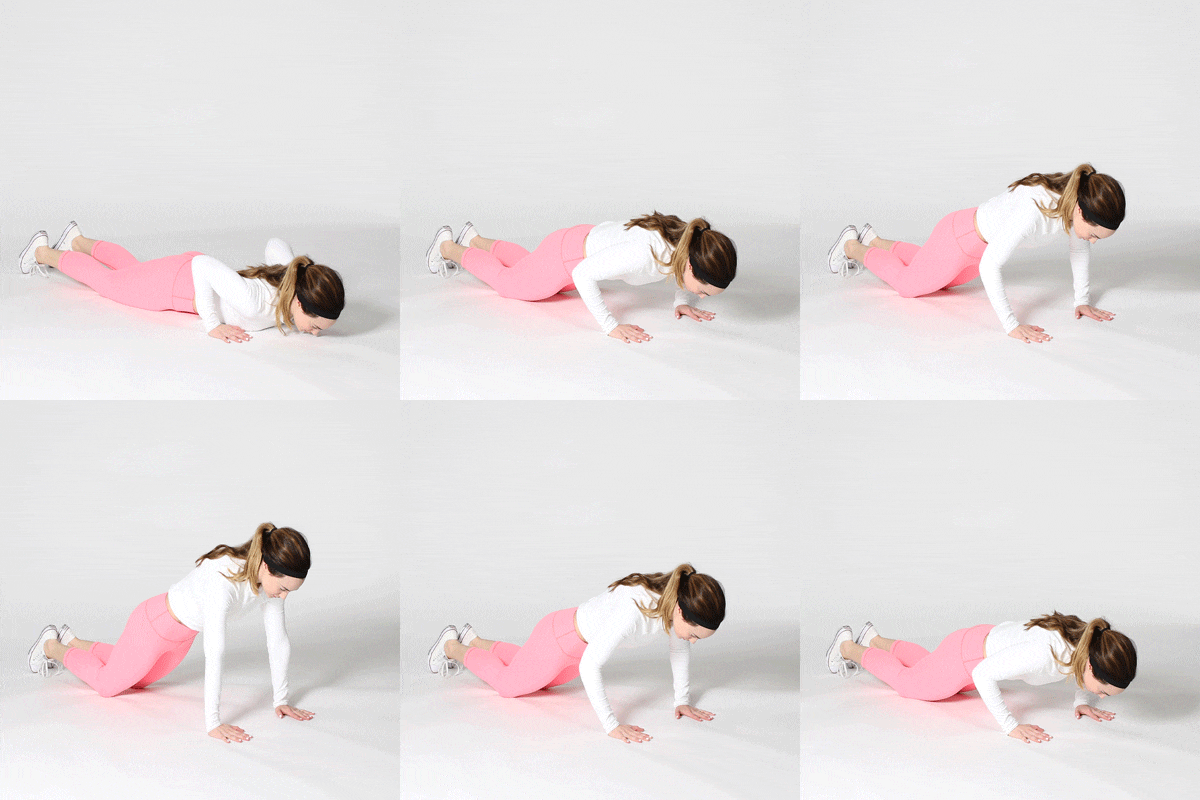
Step-by-Step Execution:
- Step 1: Start on your knees, hands wider than shoulders.
- Step 2: Lower your chest until it is 2 inches from the floor. Keep your elbows tucked at 45 degrees.
- Step 3: Push up and visualize your chest muscles “lifting” your body weight.
The 12-Week Aesthetic Chest Transformation Blueprint
- Frequency: Perform this routine 3 times per week, allowing 48 hours for muscle repair.
- Progressive Overload: Add 1 repetition or 1 lb of weight to your exercises every week to ensure continued adaptation.
- The “Invisible” Factors: Maintain a high-protein diet to support tissue repair and maintain proper spinal posture to display your results.
Commit to the architecture of your bust. Stand tall. Rebuild your silhouette.