Exercise Guide
An Exhaustive Clinical Protocol for Total-Body Metabolic Conditioning and Structural Re-Composition
In contemporary exercise physiology, isolating a singular aesthetic zone—such as the abdominal wall or gluteal complex—presents an inefficient route to long-term body transformation. While localized micro-routines yield localized fatigue, they fail to induce the profound hormonal cascade and structural adaptations seen in full-body systemic training. Conversely, engaging multiple large muscle groups concurrently optimizes skeletal muscle density, accelerates cardiovascular endurance, improves baseline mechanical posture, and limits gym time to a brief, highly concentrated window.
This 6-move metabolic conditioning program is precisely engineered to integrate your upper, lower, and deep stabilization systems into a singular, high-yield closed-kinetic loop. Requiring only minimal, light-to-moderate external resistance, this protocol serves as a functional matrix to strip away stubborn fat and develop athletic muscle tone. By executing these multi-planar complexes, you trigger significant **Excess Post-Exercise Oxygen Consumption (EPOC)**, keeping your metabolism elevated for hours post-session.
Anatomical Synergies of Full-Body Systemic Programming
| Exercise Complex | Primary Joint Dynamics | Physique & Metabolic Outcome |
|---|---|---|
| Plyometric Burpee & Lateral Hop | Triple Flexion/Extension & Frontal Displacement | Maximizes anaerobic cardiorespiratory stress and calves/quads tone. |
| Unilateral Split Squat Press | Sagittal Lunging & Overhead Vertical Pressing | Corrects lower-limb strength imbalances while shaping deltoids. |
| Push-Up & Cross Mountain Climber | Horizontal Pushing & Transverse Core Rotation | Sculpts the pectoral wall while isolating the internal/external obliques. |
| Renegade Dumbbell Row | Anti-Rotational Plank & Sagittal Pulling | Tones the rhomboids, latissimus dorsi, and deep transverse abdominis. |
1. The Plyometric Burpee with Multi-Planar Lateral Hops
The burpee is the gold standard for metabolic conditioning. This advanced variation integrates sagittal power production with frontal-plane agility to maximize caloric expenditure and increase tissue elasticity.
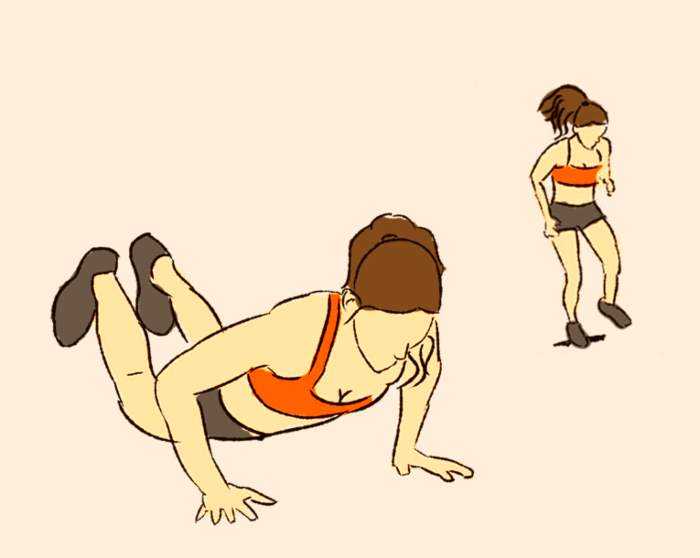
Step-by-Step Execution:
- Step 1: Alignment Foundation: Assume an athletic standing posture with your feet positioned shoulder-width apart, spine neutral, and arms resting at your sides.
- Step 2: The Squat Drop: Inhale, flex at your hips and knees to drop into a deep squat, and plant your hands firmly on the mat directly beneath your shoulders.
- Step 3: Plyometric Extension: Jump both feet back with explosive force, landing cleanly on the balls of your feet to enter a rigid high plank position.
- Step 4: Pectoral Compression: Lower your torso toward the mat by flexing your elbows, attempting to touch your chest lightly to the floor while keeping your abs braced.
- Step 5: Concentric Drive: Press through your palms to return to the high plank, then snap your feet forward near your hands, shifting your center of mass back onto your feet.
- Step 6: Vertical Acceleration: Jump straight up into full extension, reaching your hands toward the ceiling. Land with soft, absorbing knees.
- Step 7: Frontal Displacement: Once vertical, immediately perform 4 rapid, low-impact lateral jumps from side to side (Left, Right, Left, Right) to complete 1 repetition.
Prescription: 2 Sets × 15 Full Repetitions. Rest 60 seconds between sets.
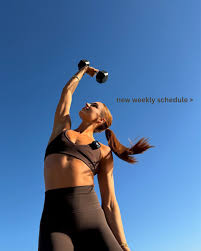
2. Unilateral Split Squat with Overhead Press
This compound unilateral variation pairs asymmetric lower-body loading with upper-body vertical pressing. It highlights and corrects left-to-right muscular imbalances while creating a lean shoulder profile.
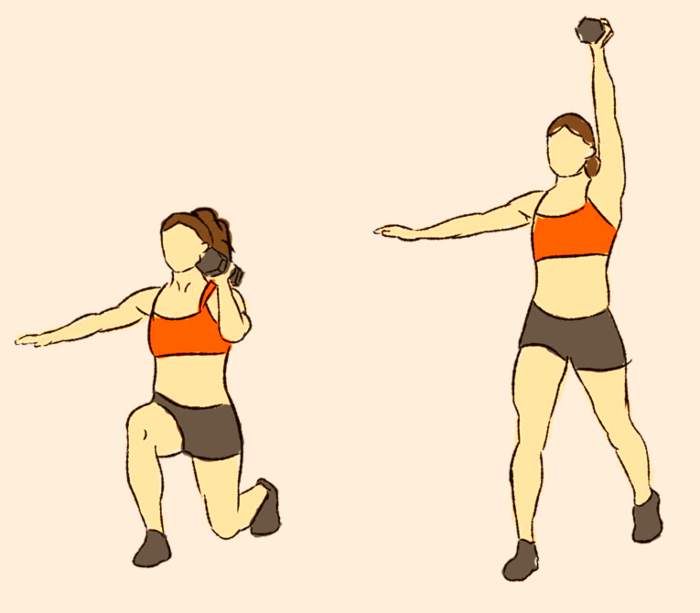
Step-by-Step Execution:
- Step 1: Stance Setup: Stand with a single moderate dumbbell held in your left hand at shoulder height. Step your right leg backward into a wide staggered stance.
- Step 2: The Deficit Descent: Lower your rear right knee vertically toward the floor, tracking your front left knee directly over your ankle at a strict 90-degree angle.
- Step 3: Postural Check: Ensure your rear thigh forms a linear vertical plane with your hip and shoulder. Contract your glutes and core to anchor your pelvis.
- Step 4: The Push-Press Drive: Drive firmly through your front heel to stand up straight. As you rise, execute a powerful vertical press with your left hand, locking the dumbbell overhead.
- Step 5: Structural Lowering: Lower the dumbbell back to shoulder height with control over a 3-second eccentric count while simultaneously dropping back down into the lunge.
- Step 6: Vector Rotation: Complete 20 reps on this side, then swap the dumbbell to your right hand, step your left leg back, and replicate the protocol.
- Step 7: Symmetrical Add-on: Conclude the set by performing 8 alternating repetitions, switching arms and legs dynamically to build core coordination.
Prescription: 2 Sets × 20 Repetitions per side + 8 Alternating Finishers.
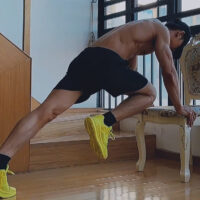
3. High-Plank Push-Ups with Cross-Body Mountain Climbers
An exceptional hybrid movement that challenges upper-body pushing power while demanding continuous rotational core stabilization. This provides deep compression to the internal abdominal corset.
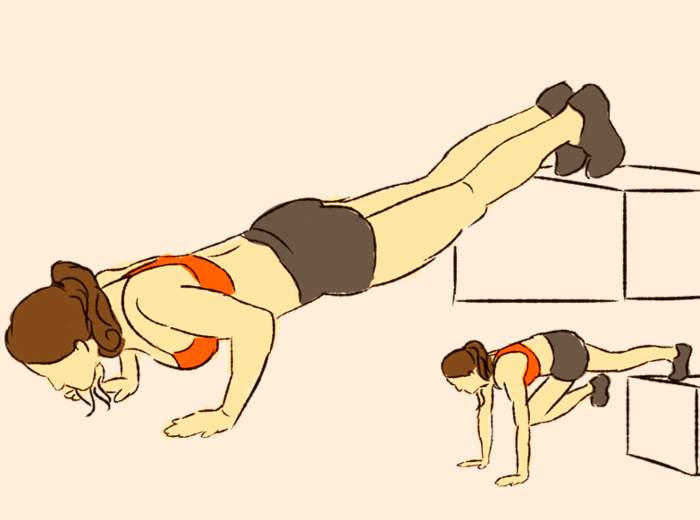
Step-by-Step Execution:
- Step 1: Plank Alignment: Place your hands flat on a sturdy bench, platform, or the floor, directly under your shoulders. Step your feet back into a clean incline plank.
- Step 2: Eccentric Push-Up: Inhale, flex your elbows backward at a 45-degree angle, and lower your sternum until it makes light contact with the surface.
- Step 3: Concentric Drive: Exhale and push through your palms to return to the apex, pulling your shoulder blades apart slightly at the top to engage the serratus anterior.
- Step 4: Transverse Climb (Right): Drive your right knee diagonally across your body toward your left tricep/shoulder. Focus on twisting from your waist while keeping your shoulders square.
- Step 5: Transverse Climb (Left): Return your foot to the platform, and immediately drive your left knee diagonally toward your right tricep.
- Step 6: Pelvic Control: Keep your hips low and level throughout the twists. Do not let your lower back sag or your hips bounce upward.
Prescription: 2 Sets × 20 Repetitions (1 Rep = 1 Push-Up + 2 Cross Climbs).
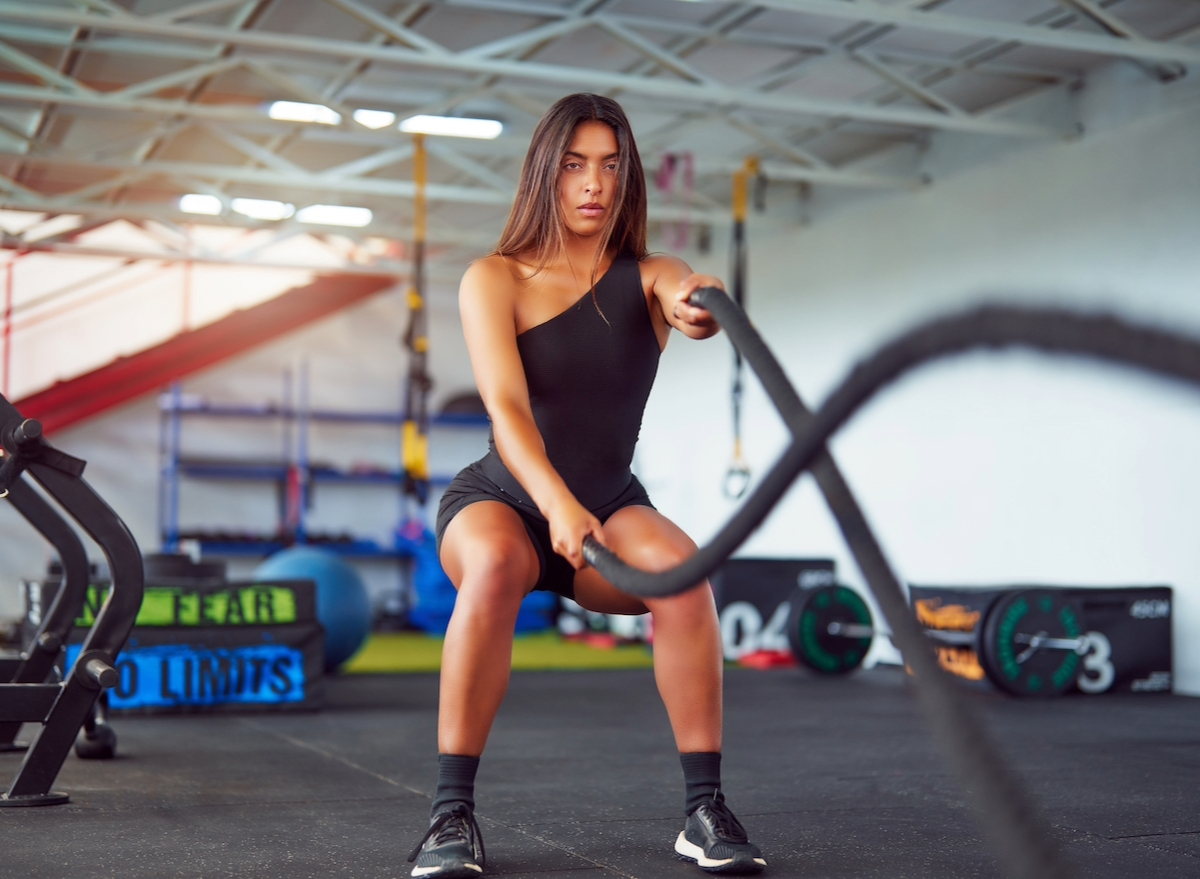
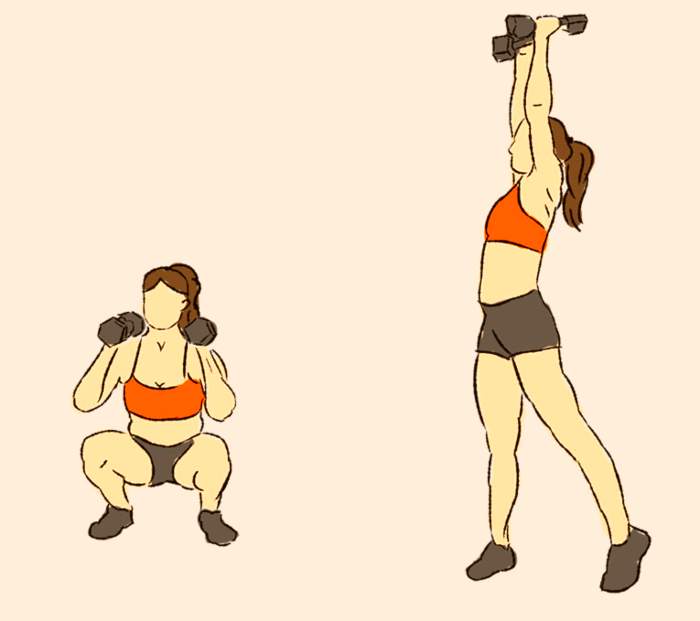
4. Front-Loaded Goblet Squat to Ceiling Reach
This classic deep squat variation uses a front-loaded position to target the lower body, then adds an overhead press to engage the shoulders and lengthen the spine.
Step-by-Step Execution:
- Step 1: Stance Setup: Stand tall with your feet slightly wider than shoulder-width apart, toes turned out 15–30 degrees. Hold a pair of dumbbells at your chest using a goblet grip.
- Step 2: The Deep Hinge: Inhale, push your hips back, and sit down until your thighs break the parallel plane. Keep your elbows tucked and pointing down.
- Step 3: Rooting Force: Distribute your weight into your heels and mid-foot. Ensure your knees track in a straight line over your toes without caving inward.
- Step 4: Triple Extension: Push through your feet to stand up. As you reach full hip extension, press the dumbbells straight up toward the ceiling.
- Step 5: Rotational Pivot: Pivot on your left toe, rotating your hips and torso toward the right as you reach. Return to the center and lower the weights back to your chest.
- Step 6: Alternating Flow: Descend back into the squat, stand, and pivot toward the opposite side with control.
Prescription: 2 Sets × 15 Controlled Repetitions.
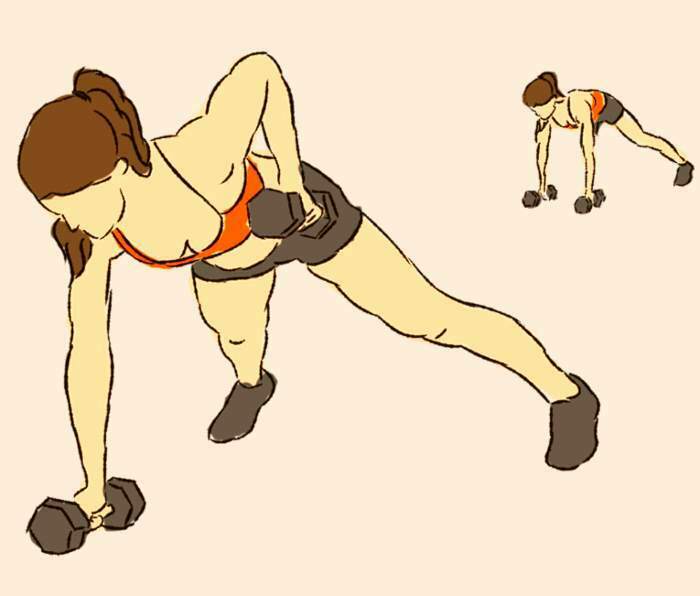
5. The Anti-Rotational Renegade Dumbbell Row
The Renegade Row is a challenging anti-rotational exercise. It forces the core to keep the torso completely still while the upper back executes a heavy pulling movement.
Step-by-Step Execution:
- Step 1: Plank Foundation: Hold a dumbbell in each hand and place them flat on the floor shoulder-width apart. Set your feet wide to create a stable base.
- Step 2: Shoulder Alignment: Position your shoulders directly over the dumbbells. Lock your hips into a neutral position and brace your core.
- Step 3: Unilateral Pull (Right): Drive your left hand into the floor to stabilize your body. Exhale and row the right dumbbell up toward your ribcage, drawing your elbow back.
- Step 4: Anti-Rotation Check: Do not let your hips tilt or twist as you lift the weight. Your pelvis must remain square to the floor.
- Step 5: Eccentric Control: Return the right dumbbell to the mat with control over a 2-second count.
- Step 6: Unilateral Pull (Left): Repeat the row on your left side, focusing on a strong contraction in your upper back.
Prescription: 2 Sets × 20 Alternating Repetitions (10 rows per side).
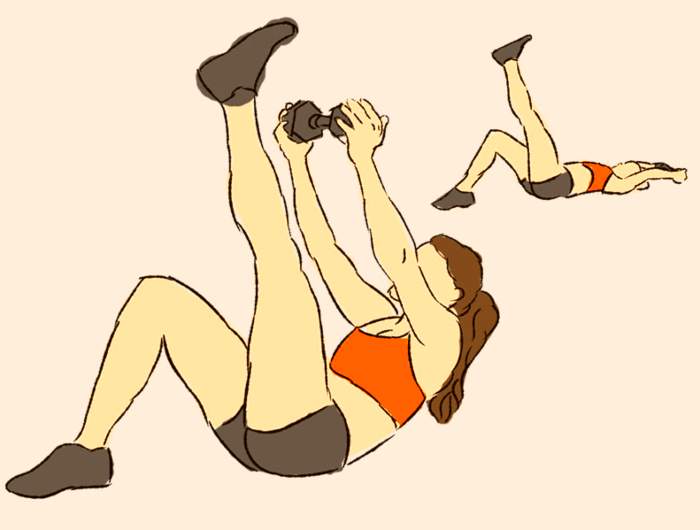
6. Overhead Pullover to Concentric Toe-Taps
This final movement challenges core control through a long lever arm. It targets the upper and lower abdominals while opening up the upper back.
Step-by-Step Execution:
- Step 1: Supine Positioning: Lie on your back, holding a single dumbbell horizontally with both hands. Bend your knees and place your feet flat on the floor.
- Step 2: The Overhead Reach: Extend your arms straight toward the ceiling, then slowly lower the dumbbell behind your head until your upper back opens up.
- Step 3: Lower Ab Lift: Contract your lower abs to lift your right leg, extending it straight toward the ceiling.
- Step 4: Core Compression: Exhale and pull your navel down toward the floor, slowly lifting your left leg to meet your right at the center.
- Step 5: Meet at the Center: Bring the weight forward to meet your extended legs halfway, crunching your abs tightly at the top of the lift.
- Step 6: Lower with Control: Lower your legs and arms back to the starting position over a controlled 3-second count, stopping just before touching the floor.
Prescription: 2 Sets × 15 Controlled Repetitions per leg.
Target: Gluteus Maximus, Erector Spinae, Hamstrings, Transverse Abdominis
An exceptional corrective move to wrap up your routine. The reverse plank strengthens the posterior chain and flattens the stomach by stretching the front of the body while keeping the back under tension.
- Step 1: Sit on your mat with your legs extended straight out in front of you. Place your palms flat on the floor behind your hips, fingers pointing forward.
- Step 2: Press into your hands and heels, driving your hips vertically up until your body forms a straight line from head to toes.
- Step 3: Squeeze your shoulder blades together, look toward the ceiling, and contract your glutes and abs tightly to keep your hips elevated. Hold for 30 seconds.
Prescription: 2 Sets × 30-Second Isometric Holds.
The 4-Week Full-Body Transformation Blueprint
- Frequency: Perform this full-body routine 3–5 days per week to allow for adequate muscle recovery.
- Circuit Structure: Execute each movement back-to-back, resting 30–60 seconds between exercises. Rest 1–2 minutes after a full round, and repeat the circuit 3–4 times.
- Endorphin Response: This conditioning profile triggers a significant release of beta-endorphins, helping lower cortisol, relieve stress, and improve sleep patterns.
- Nutritional Support: Pair this high-yield conditioning routine with a clean, protein-rich diet to fuel muscle repair and maximize systemic fat loss.
Commit to the full kinetic loop. Control every repetition. Resculpt your body profile.